The air-cooled heatsink series has been comprehensively upgraded, delivering enhanced cooling solutions and superior value:
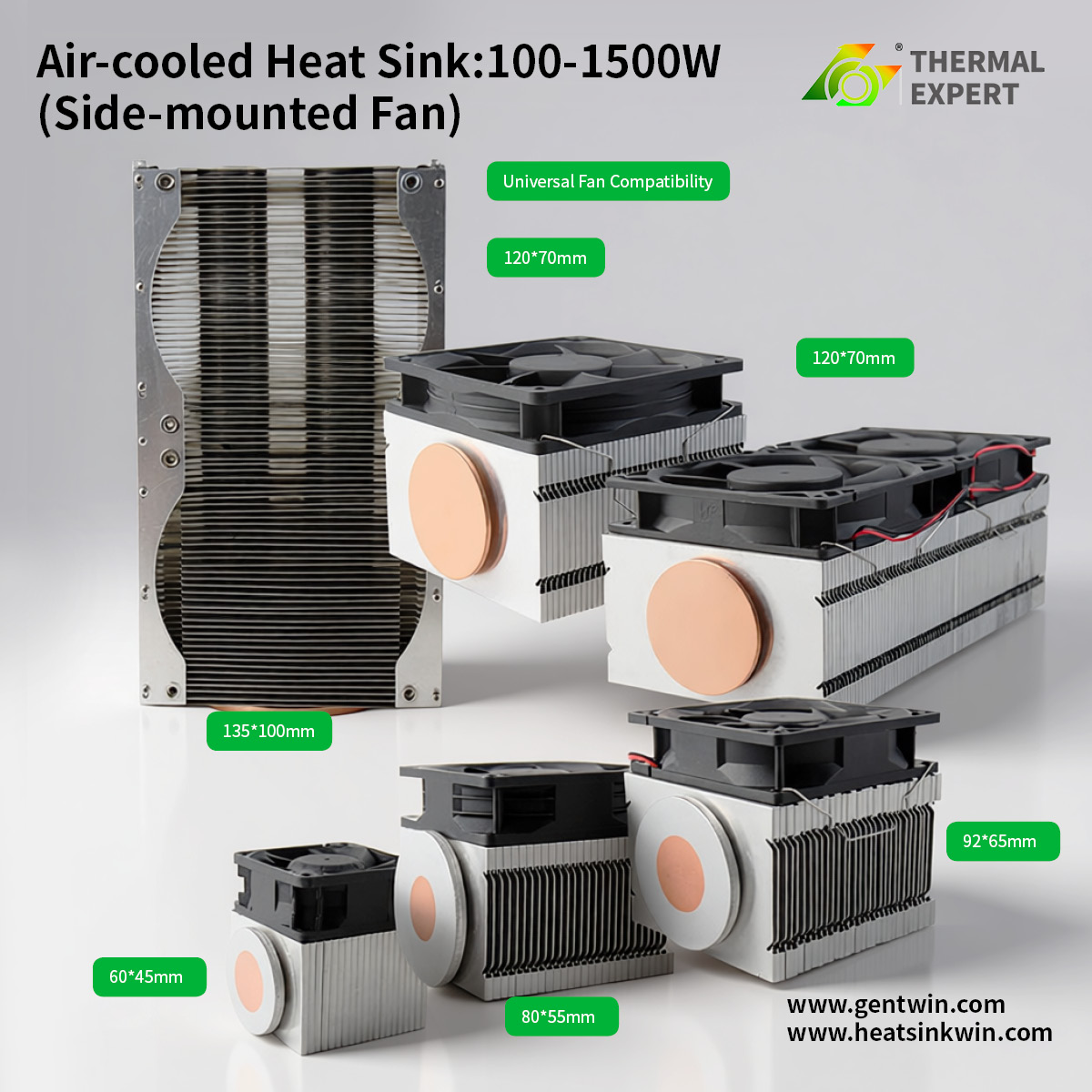
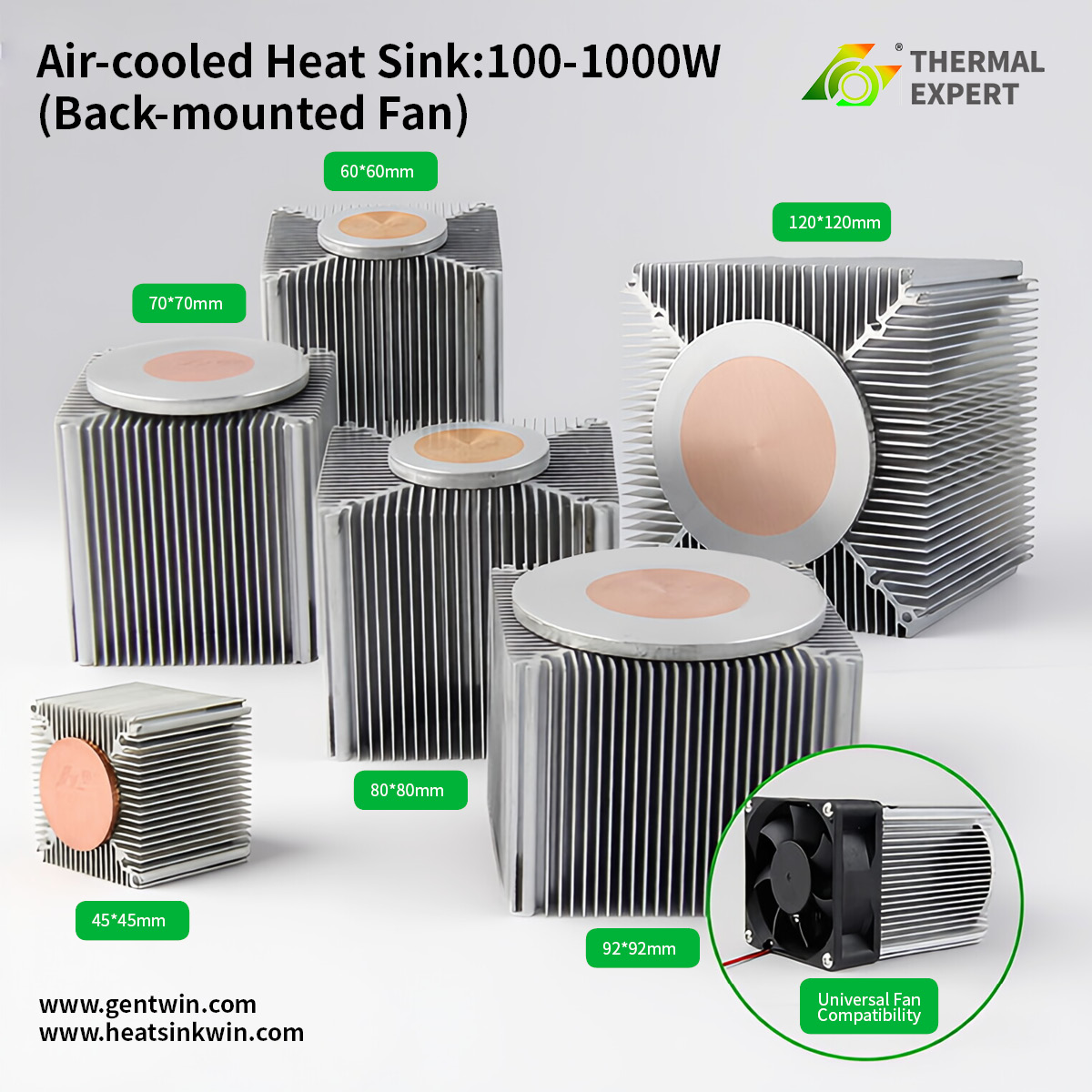
1.Wide Compatibility: Supports various standard fan specifications
2.Flexible Installation: Accommodates side-mount and back-mount configurations for diverse scenarios
3.Broad Power Coverage: Meets diverse thermal management requirements
4.Enhanced Value: Significantly improved cost-effectiveness with volume discount options
5.Fully Public Mold Design: Reduces tooling costs for more economical procurement
6.Customization Support: Heat pipes/thick heat pipes available for separate purchase (Note: Heat pipes below F8 not provided)
7.Compact and Efficient: Optimized structure, compact dimensions, no dead ends, supports full-angle usage
8.Complete Range: Aluminum variants available simultaneously for greater flexibility
Heat pipe radiators utilize high-efficiency thermal conductive elements—heat pipes—which rapidly dissipate heat by directly and tightly bonding to heat sources. This heat is then dissipated through convection via the radiator fins.
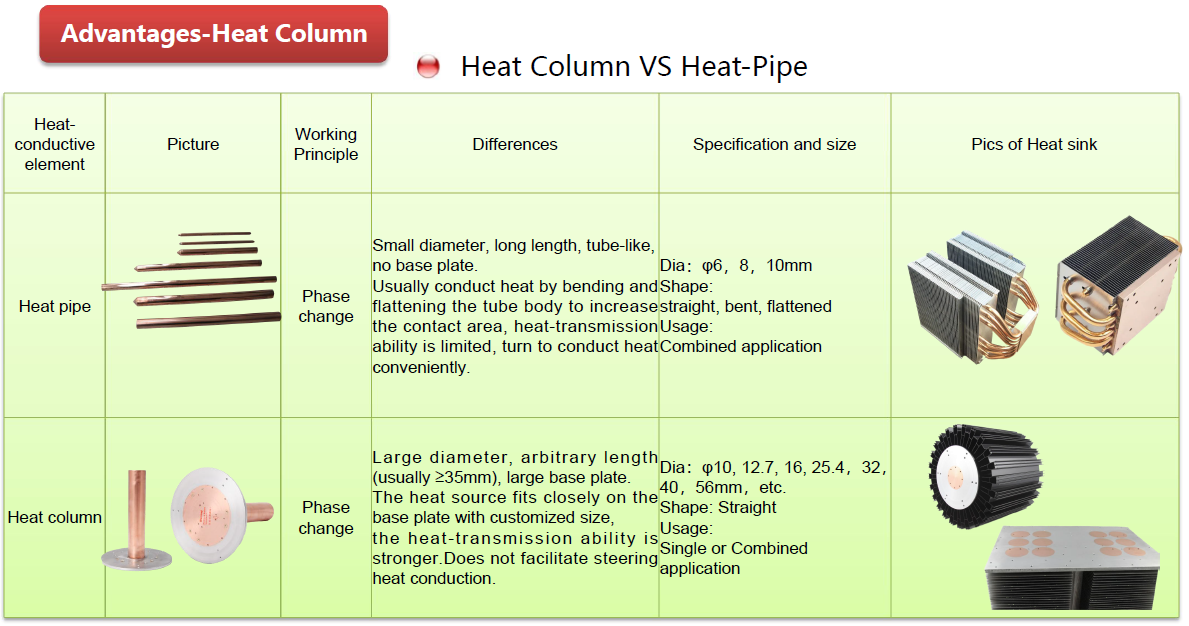
Heat pipes are high-performance two-phase flow thermal conductive elements. Essentially, they are large-diameter heat pipes with a bottom end face. Also based on the principle of phase change heat transfer, they achieve efficient heat conduction through gas-liquid conversion. Compared to conventional heat pipes, their manufacturing process is more complex, yet they offer superior thermal conductivity. Currently, few manufacturers possess the capability for mass production.
- Compared to traditional metal heat sinks (e.g., copper, aluminum), heat pipe-based heat sinks offer the following advantages:
- Significantly superior thermal conductivity compared to metals (sintered heat pipe λ > 20,000 W/(m·K), copper: 401, aluminum: 237);
- More compact structure with smaller volume and lighter weight;
Unlike conventional heat pipe radiators, thermal columns require no bending or flattening processes, avoiding the resulting reduction in thermal conductivity. They also eliminate the common “dead end” issue in heat pipes, enabling full-angle installation (heat pipes with high aspect ratios suffer significant performance degradation when used against gravity).
Performance Advantages of Heat Column Radiators (Based on Actual Test Data):
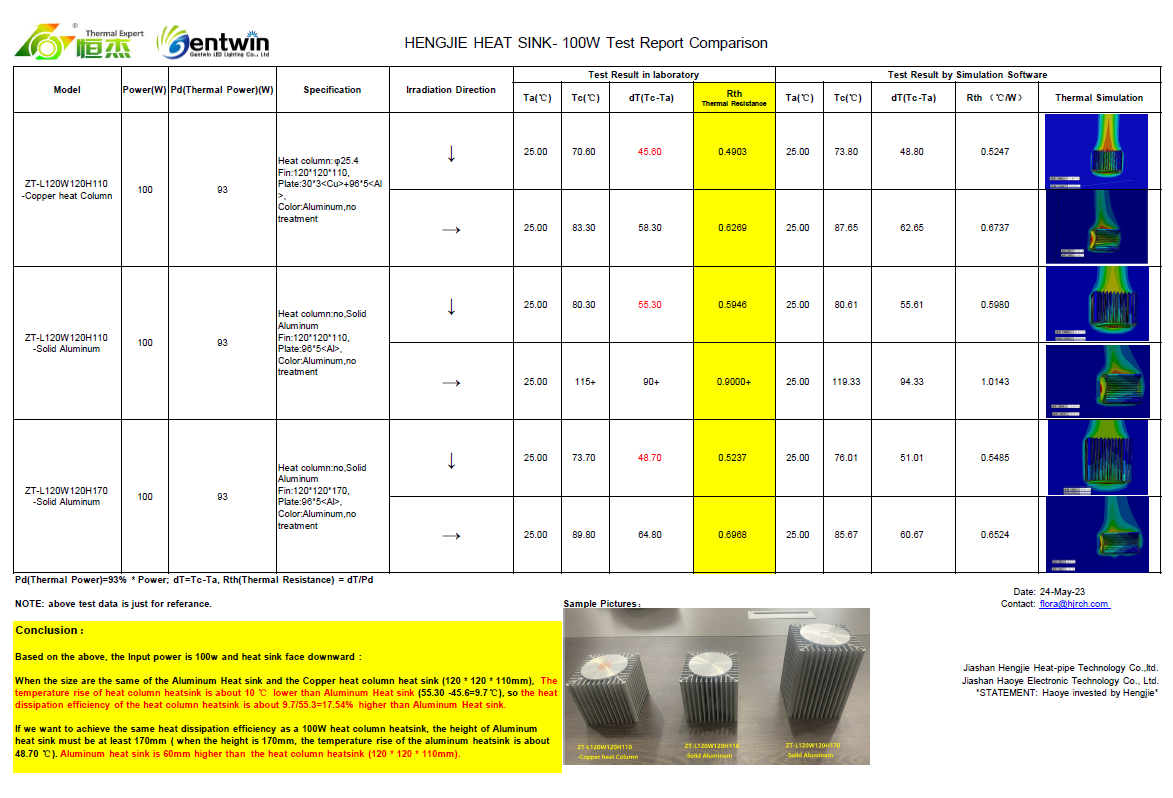
Experimental Data Comparison (Input Power: 100W, Heat Source Positioned Below, Heatsink Dimensions: 120 × 120 × 110 mm):
- Thermal column heatsink temperature rise: 45.6°C
Pure aluminum heatsink temperature rise: 55.3°C
Thermal column temperature rise reduced by approximately 9.7°C
- The thermal column heatsink demonstrated a relative improvement in thermal efficiency of approximately 17.5%.
To achieve a temperature rise comparable to the thermal column heatsink (height 110 mm) at the same power level (approximately 45.6°C), the height of the pure aluminum heatsink would need to increase to over 170 mm, representing an elevation increase exceeding 60 mm.

